18 Cheshvan, 5784 / 1 November, 2023
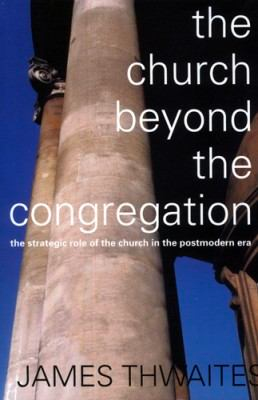
Yesterday, I introduced a book review series of The Church Beyond the Congregation by James Thwaites (Paternoster Press, 1999). This book is sweeping overview of the crisis faced by the church: a church which has largely been tethered to the congregational event at the expense of pursuing and inhabiting the entire creation.
The book cover itself is a useful picture of this distinction. A pillar is a crucial part of a building holding up the structure.
in architecture and building construction, any isolated, vertical structural member such as a pier, column, or post. It may be constructed of a single piece of stone or wood or built up of units, such as bricks. It may be any shape in cross section. A pillar commonly has a load-bearing or stabilizing function [emphasis mine] but it may also stand alone, as do commemorative pillars.
https://www.britannica.com/technology/pillar
Without support structures a building would collapse under the weight of the building. WARNING!!!! I want to clearly emphasise, and the book makes a point of this, that gathering together as the followers of Jesus Christ and sharing our lives together is vitally important as community. We are called to grow together and are shaped into a community rather than as lone individuals. As the apostle Paul writes in 1 Corinthians 14:4
4 Now there are varieties of gifts, but the same Spirit; 5 and there are varieties of service, but the same Lord; 6 and there are varieties of activities, but it is the same God who empowers them all in everyone. 7 To each is given the manifestation of the Spirit for the common good. (ESV)
However, it would be absurd to think that the pillar supporting the building is the entire building! In the same way Thwaites’ argues that the life of the church cannot be limited and concentrated into the church gathered alone. There is an entire building called creation with it’s huge scope and spheres of existence that were always meant to be the saints focus in their life and work.
So where did it go wrong?
In chapter 2, Thwaites embarks on a whistle stop tour through scripture history: the Fall leading to idolatry and alienation of humanity from their Creator. The revelation of God still being visible but obscured by idolatry. Abraham, being out of that idolatry to worship the one, true God and from him came the nation of Israel. Then a rollercoaster ride through the Old Testament Hebrew Scriptures: a nation of people shaped by their covenant with God which sometimes rose to the heights of obedience and covenant faithfulness but all too often slid down into the depths of greater idolatry culminating in the judgement of God and exile of Judah in the year 586 BC. After 70 years of captivity in Babylon a remnant of the chosen nation returned.
What Thwaites identifies is the move the enemy makes soon after this time raising up two important figures:
The teaching and influence of Buddha and Plato divided the universe in two.
The Church Beyond the Congregation (p14)
In the east: Buddha (563-483BC) breaking from Hinduism, denied most of life, both good and bad, attempting to find enlightenment. The dissolution of the soul in an eternal spirit realm.
In the west: Plato (427- 347BC), disregarded the greek pantheon of gods and goddesses setting true reality off, like Buddha, in some removed other realm of the perfect forms:
Plato said that the created world we see around us was not actually the real world. Rather it was one of dark shadows and imperfect forms that only served to represent a perfect realm that was forever removed from life. This ideal dimension was found in the eternal realm, detached from the temporal, known only vaguely through concepts and possibly available after death. (p14)
This became the seedbed from which the split universe of the removed spiritual realm was lost to the material, physical everyday world of “real” life. A worldview alien to the hebraic view of reality and the Bible. Next time we’ll see how this developed over the last 2500 years.
Now marvel at my incredible lack of visual illustration skills!

© Stephen Paul Jacob

 Image Bearers
Leave a comment